

Pool design in Dubai starts with three decisions that shape everything else: the style that fits your property and how you plan to use it, the realistic AED budget for each option (including items that most base quotes leave out), and securing approvals before excavation begins. Miss any one of these, and the project will cost more time and money than it should.
Dubai's pool construction market in 2026 has moved firmly toward integrated outdoor environments: pools designed alongside pergolas, planting, lighting, and outdoor kitchens as one composition. That shift raises the bar for planning, but it also means a finished outdoor space that actually functions through the year, rather than a pool surrounded by afterthoughts.
At Cove Landscaping, we have been designing and building pools, pergolas, and integrated outdoor spaces across Dubai for over 10 years. The recommendations throughout this guide draw on that project experience and on current market data.
Dubai's outdoor living market has shifted decisively toward multi-purpose, resort-style spaces. The style that works best for your villa pool design depends on your plot size, the view from the garden, how the space will be used, and your overall landscaping ambition. Choosing on aesthetics alone, without considering those factors, is the most common early mistake we see.
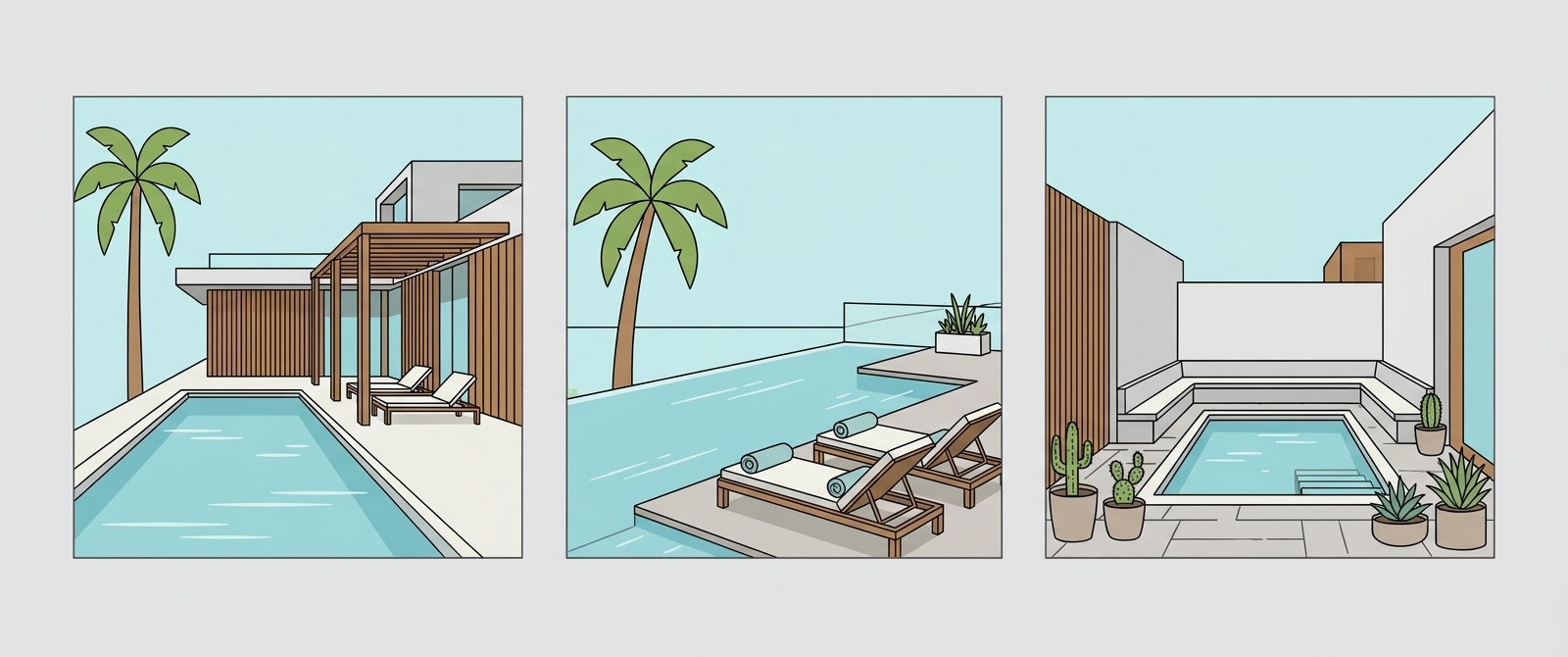
Long rectangular pools remain the strongest choice for contemporary villas and fitness-focused owners. Clean geometry suits most standard plots and pairs naturally with porcelain decking, shade pergolas, and integrated planting screens. Where the garden is too short for a full lap pool, a shorter pool with counter-current jets delivers an effective exercise option without demanding a 12-metre run.
Geometric pools are also the most straightforward to permit, build, and maintain. For owners whose priority is a usable, good-looking outdoor space with predictable costs, a well-proportioned rectangular pool often gives the best return on investment.
Infinity pools are the leading luxury choice for villas with skyline, golf-course, or elevated garden views. Perimeter overflow systems produce a mirror-like surface and constant water sound that genuinely changes how the garden feels in the evening. The construction complexity is real: balance tanks, surge chambers, and additional pumps all add cost and require more careful long-term servicing.
For a villa with a compelling view and the plot to match, that investment is well justified. Where the view is not a defining feature, the same budget spent on a well-finished geometric pool with premium landscaping and lighting often delivers a stronger overall result. Adding a specific plot condition, such as an elevated boundary wall that frames a golf-course aspect, is what typically tips the calculation toward an infinity edge.
Plunge pools are growing fast for smaller gardens, rooftop terraces, and townhouses. The emphasis is on deep cooling water, built-in seating, and hydrotherapy jets rather than swimming length. Freeform designs with organic planting suit garden-led properties where the pool needs to feel like part of a landscape. Multi-zone family pools combine sun shelves, shallow children's areas, and deeper swim zones in one connected layout, a consistently popular choice for larger villa plots across Dubai.
Costs vary considerably by pool type, size, finish, and what the quote actually includes. The figures below are market-planning ranges drawn from current Dubai market data: always confirm inclusions and VAT position before comparing quotes from different contractors.
Based on current Dubai market data, a realistic villa budget for a good-quality medium pool with decking and cooling sits at approximately AED 180,000–300,000. A large infinity pool with premium finishes and landscaping typically requires AED 350,000–600,000 or more. These are whole-project figures, not core-build-only numbers.
Base quotes commonly exclude decking and landscaping, pool cooling or heating, premium stone or glass mosaic finishes, spa sections, difficult access, rock excavation, and VAT. Those exclusions can add a material amount to what an initial price looks like on paper. Infinity and overflow pools cost more not simply because of the aesthetic: the balance tank, structural detailing, and additional waterproofing specification account for most of the premium.
Integrating landscaping, shade structures, and MEP (mechanical, electrical, plumbing) in one contract consistently delivers better value and fewer coordination problems than separating them across multiple contractors. That is a central reason why we structure Cove Landscaping projects as a single unified delivery covering pool, decking, pergola, planting, drainage, and outdoor electrical from day one.
Dubai's climate, intense UV, air temperatures that regularly exceed 40°C in summer, rapid evaporation, dusty air, and warm water, means material choices made at design stage directly determine how much the pool costs to maintain each year and how long before it needs resurfacing. Defaulting to the cheapest option at each decision point is a reliable way to increase the five-year cost significantly.
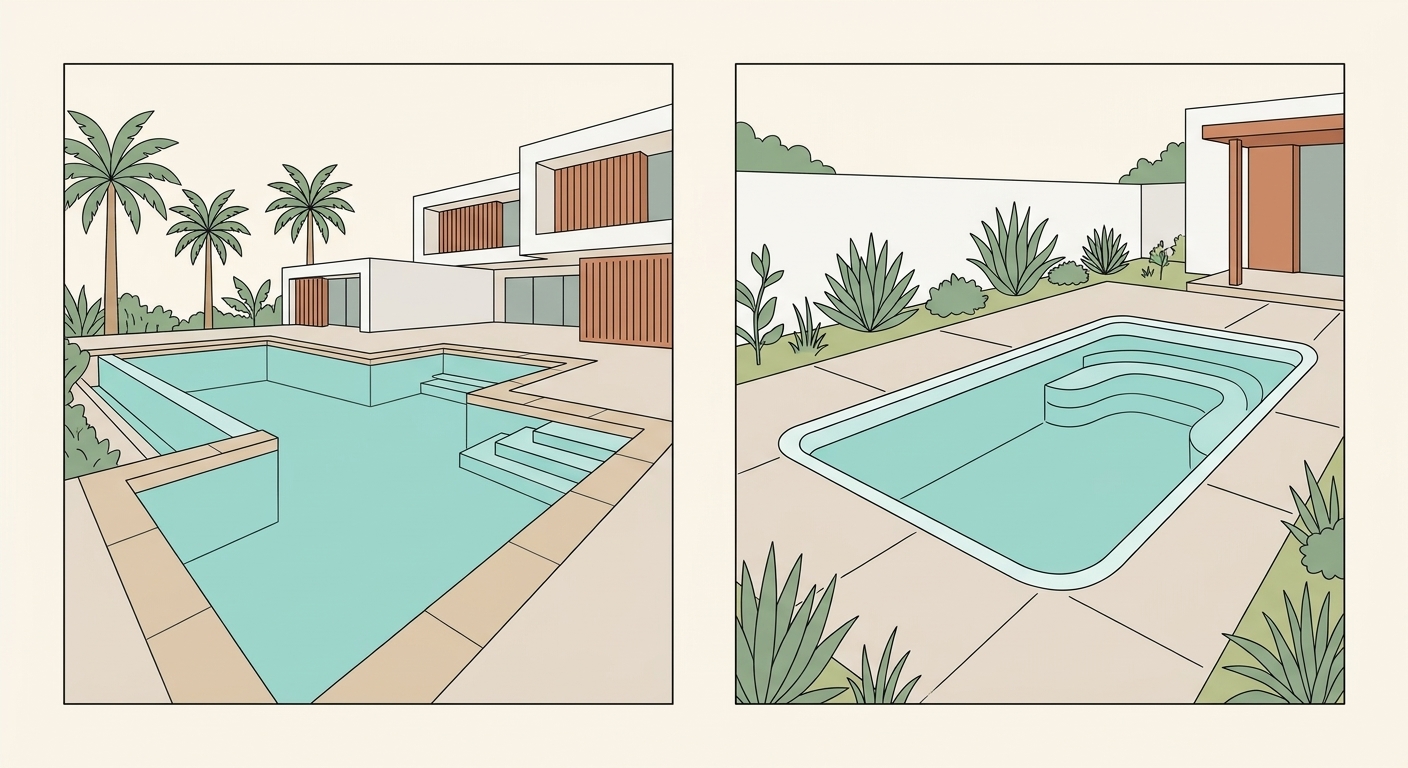
Concrete (shotcrete or gunite) is the most flexible for custom shapes, infinity edges, and premium architectural details. A properly built and waterproofed shell can last decades; the internal finish is the recurring maintenance item, not the structure itself. When a project calls for a custom infinity edge, integrated water feature, or deep multi-zone layout, reinforced concrete with a premium finish is the natural starting point.
Fiberglass is non-porous, faster to install, and generally cheaper to maintain week-to-week. It limits algae attachment and reduces chemical demand. The trade-off is less flexibility on shape, and UV and salt compatibility must be confirmed for Dubai conditions. Fiberglass suits compact plunge-pool builds where speed and ease of maintenance take priority over architectural flexibility.
Porcelain tile is durable and easy to clean, well suited to waterlines and steps, but grout quality is critical: poor grout fails quickly through Dubai's heat cycle. Glass mosaic delivers a premium finish and good water resistance, but installation and replacement costs are high. It works best where the finish is a deliberate architectural feature.
Sand filters are the most common and service-friendly option in Dubai. Cartridge filters conserve more water, reduce backwash losses, and suit smaller pools well. Variable-speed pumps carry a higher purchase price but can cut energy consumption substantially. DEWA's published guidance on energy-efficient pool equipment estimates potential lifetime energy savings of roughly 50–70% compared with single-speed units, depending on operating schedules and hydraulic design. Salt-chlorine generators reduce manual chemical handling and recurring chemical cost, but salt water can accelerate corrosion in unsuitable metal components and damage adjacent stone or decking. Specifying salt-compatible materials from the start avoids expensive remediation later.
Automatic pH dosing and a properly sized pool cover are the most practical tools for reducing chemical spend, limiting evaporation, and extending finish life between service visits. For most villa pools in Dubai, a well-sized sand or cartridge filter combined with a variable-speed pump and salt-compatible components offers the strongest durability-to-maintenance balance.
Submit architectural, structural, mechanical, electrical, and safety drawings through the Dubai Building Permits System, or through the Municipality's e-service for relevant development areas. Pool works may need to be linked to the villa's existing building-permit transaction, and a Dubai Municipality-registered consultant and contractor are required throughout. Obtain approval before excavation.
After construction, arrange the Municipality inspection and retain completion documentation before the pool is used. For gated communities and developments such as Palm Jumeirah or Emirates Hills, allow additional time for community and developer NOC processes.
Dubai has a large number of pool contractors. The difference between a smooth project and a costly one usually comes down to three things: the depth of local experience, the quality of the structural and waterproofing specification, and whether the contractor can coordinate landscaping and MEP within the same contract.
Request recent Dubai project addresses or client references you can contact directly, not just photographs or directory listings. Ask for the full waterproofing and structural specification, the filtration and automation inclusions, warranty terms, and confirmation of who handles Municipality permit responsibilities.
For an integrated villa project, confirm that the contractor can design and deliver the pool, decking, shade structure, planting, drainage, and outdoor electrical as one coordinated brief. Separating these across multiple contractors is a common source of delays and cost overruns in Dubai. Structural footings, electrical conduit routes, drainage falls, and waterproofing details need to be coordinated from the design stage, not negotiated between trades on site.
At Cove Landscaping, we design and build pools, pergolas, irrigation, and MEP exterior works under a single contract, drawing on more than a decade of project delivery in Dubai. The pool, the shade structure, the garden, and the electrical are planned together from day one, not assembled sequentially. This matters because the outdoor space only performs well when cooling, shading, lighting, drainage, and planting are designed around the pool rather than added afterward.
For villa owners and developers who want a finished outdoor environment, that integrated capability is worth raising early in the design conversation. Get in touch with our team to discuss your plot, your brief, and the realistic scope and timeline for your project.
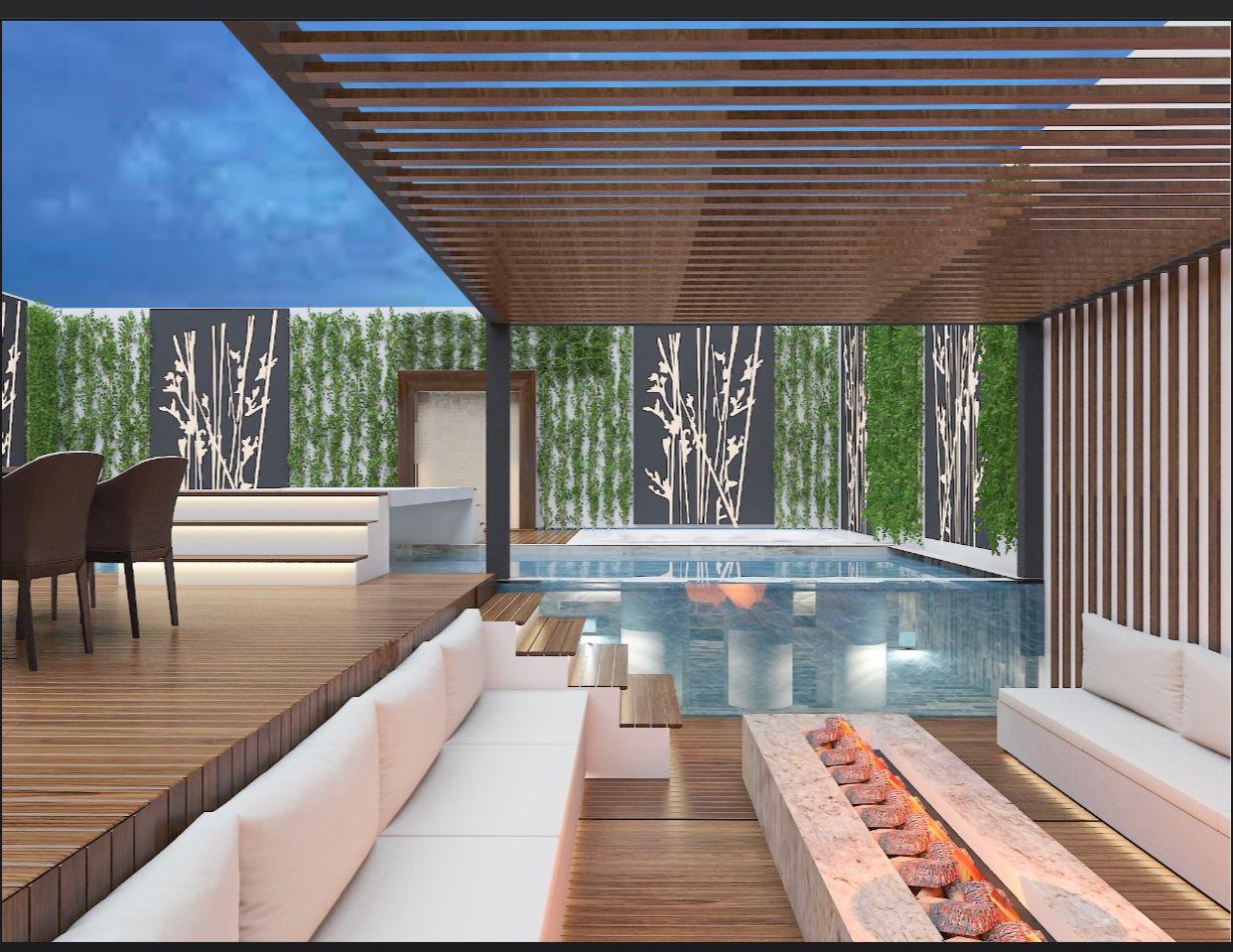
The core decisions are clearer now: choose the pool design in Dubai that fits the property and how it will be used; budget realistically in AED from the start, including decking, cooling, and landscaping; specify materials for Dubai's conditions rather than defaulting to the cheapest option; and get Municipality approvals in place before excavation begins. Each of those decisions has a compounding effect on project cost, timeline, and long-term maintenance.
Allow four to five months as a realistic planning window for a standard villa pool, and five to six months for a complex design or a heavily regulated community. Quality pool contractors in Dubai and approvals both take time, and the project calendar fills up faster than most owners expect, particularly in the cooler build season when demand is highest.
At Cove Landscaping, we work with villa owners, developers, and hospitality clients across Dubai on pool, landscaping, and MEP exterior projects delivered under one coordinated contract. If you are at the planning stage, reach out to our team early. Getting the design and specification right at the start is what separates a project that runs smoothly from one that stores up problems for later.
Yes, you can use a salt-chlorine system provided you specify salt-compatible materials from the start. Salt can accelerate corrosion in unsuitable metal components and damage adjacent stone or decking, so salt-compatible components and detailing are required to avoid expensive remediation later.
Automatic pH dosing and a properly sized pool cover are the most practical tools for reducing chemical spend and limiting evaporation. The article also highlights that good filtration, variable-speed pumps, and salt-compatible components contribute to a lower maintenance burden overall.